The short answer
To plan a castle wedding in Ireland, choose May through September for the longest daylight, plan for changeable weather with a covered backup and clear umbrellas, and start the legal paperwork early, since Ireland requires at least three months' notice to the Civil Registration Service for a legal marriage. Overcast skies give soft, flattering light for portraits.
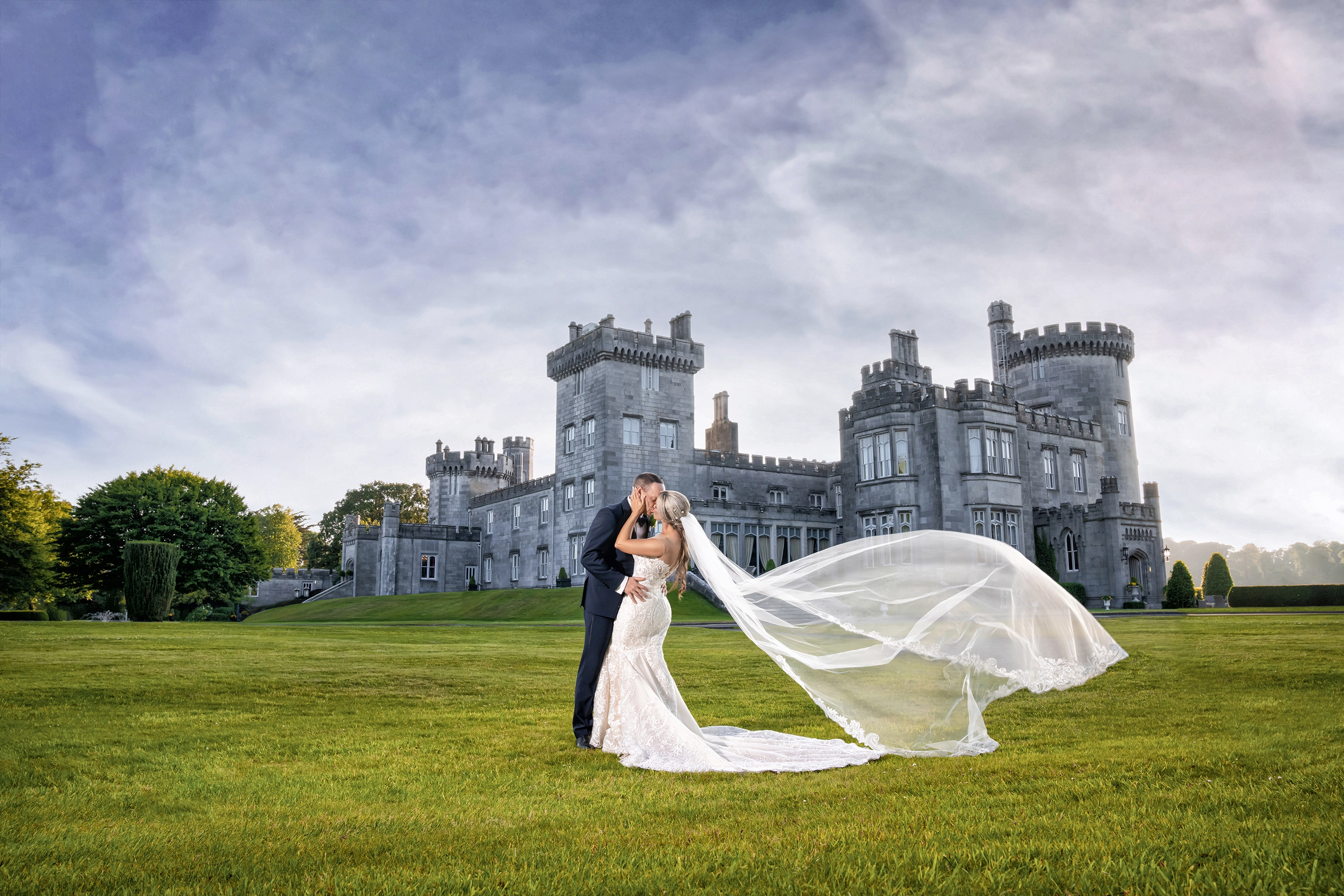
There's a reason Irish castles top so many destination wedding wish lists. Turrets and stone walls, lawns so green they barely look real, and a sense of history that makes every portrait feel timeless. We've photographed couples in front of these walls, and the images are among the most dramatic in our portfolio. Here's what we've learned about planning one.
When is the best time for a wedding in Ireland?
Late spring through early autumn, roughly May to September. Summer days in Ireland are remarkably long; in late June the sun doesn't set until close to 10 p.m. in the west, which means unhurried portraits after dinner. In the depths of winter the sun can set before 4:30 p.m., so a December wedding needs portraits scheduled early in the afternoon.
Plan for the weather, and embrace it
Irish weather can change several times in a single afternoon. Every castle venue has an indoor option, and you should book it as a backup no matter what the forecast says. A few clear umbrellas for the wedding party are worth packing; they keep everyone dry without hiding faces.
Why grey skies are good news
Overcast light is soft and even, which flatters skin and keeps white dresses from blowing out. Dramatic clouds, like the sky in the portrait above, add mood that a cloudless day simply can't.

Dramatic clouds add mood that a cloudless day simply can't.
Making it legal
Ireland requires couples to give at least three months' notice to the Civil Registration Service before a legal civil marriage, and the notice is usually given in person. Requirements can change, so check the current rules with the Civil Registration Service early. Many couples choose to sign the legal paperwork at home and hold a symbolic ceremony at the castle instead, which removes the time pressure entirely.
Getting the most from a castle setting
- Walk the grounds before the day. Towers, archways, walled gardens and long driveways all make great backdrops; know where they are before portrait time.
- Ask about access. Some parts of historic properties are off-limits to guests. Confirm where your photographer can go.
- Pack sensible shoes. Lawns are soft and often damp. Flats or wellies for the walk to portrait spots save your heels and your hem.
- Book a day-after session. If you're traveling that far, an extra hour of portraits the next day, without a schedule, often produces the favorites.
Bringing your photographer with you
Destination weddings work best with a photographer who has traveled for work before and knows how to plan around flights, equipment and unfamiliar venues. Our guide on choosing a photographer for your destination wedding covers the questions to ask.