The short answer
To get great hora photos, schedule the dance right after your grand entrance while energy is highest, tell your DJ or band and photographer the exact timing, choose sturdy chairs and strong lifters, and keep the dance floor lights bright enough for the camera. Two photographers capture both the lift and the crowd.
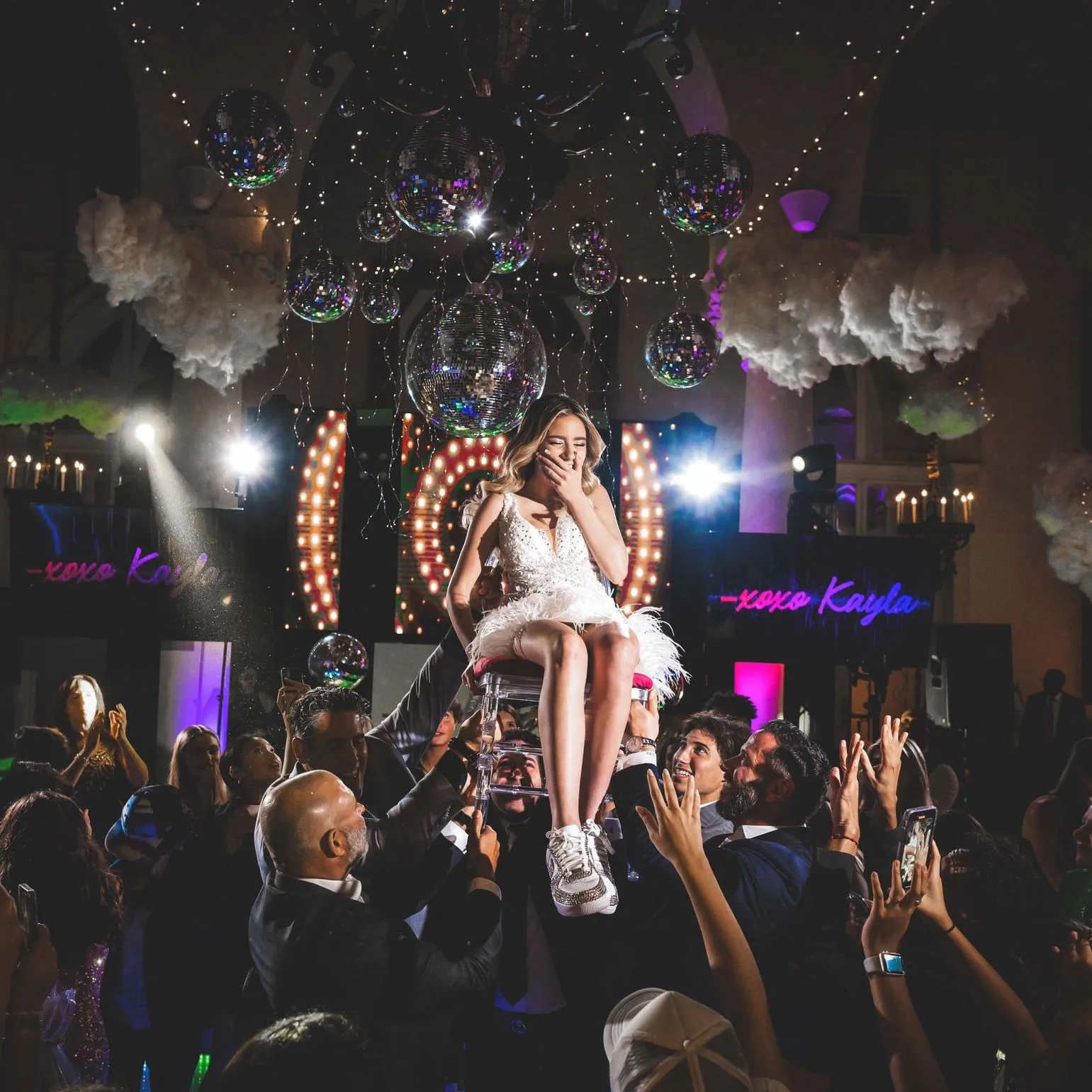
Few moments at a celebration match the energy of the hora. The circle forms, the music builds, and suddenly the guest of honor is high above the crowd, laughing or holding on for dear life. It happens fast, it happens once, and it produces some of the most joyful photographs of the night when it's planned well.
What is the hora?
The hora is a traditional circle dance performed at Jewish weddings and b'nai mitzvahs, usually to "Hava Nagila." Guests dance in rings around the couple or the bar or bat mitzvah, and the guests of honor are lifted on chairs. At weddings, the couple often hold opposite ends of a napkin or handkerchief while they're lifted.
When should the hora happen?
Right after the grand entrance is ideal. Guests are excited, the dance floor is already full, and nobody has settled into dinner yet. Tell your DJ or band and your photographer the exact moment it will start so nobody is in the wrong place when the music hits.
How long does it last?
Most horas run 10 to 20 minutes. That's enough time for the main lift, lifts for parents or grandparents, and a few rounds of the circle without exhausting your guests before the night has really started.

It happens fast and it happens once, so plan it like the main event it is.
Tips for great hora photos
- Choose sturdy chairs. Ask your venue or rental company for solid chairs that can safely take a lift. Flimsy ballroom chairs aren't built for it.
- Pick strong, steady lifters. Four to six people per chair, ideally the same group each time, so the lift is smooth instead of shaky.
- Hold on with one hand. Keep one hand on the chair and use the other to wave, reach for your partner or hold the napkin. It looks joyful rather than panicked.
- Keep the lights up. Haze and moving lights look amazing in person, but a completely dark floor makes faces hard to photograph. A little front light from the DJ booth helps enormously.
- Ask guests to put phones down. A ring of raised phones blocks the view of everyone outside the circle, including your photographer.
Why two photographers help
With two photographers, one can work inside the circle to capture faces up close while the other shoots from a higher vantage point to show the whole room in motion. If you're also having a film made, let your videographer and photographers agree on positions in advance. We cover this in more detail in do you need both photography and videography.
For mitzvah families, our mitzvah photography team plans the hora with your DJ the same way we plan a first dance: as a highlight worth getting exactly right.