The short answer
A typical wedding ceremony runs: guest seating, the processional, a welcome from the officiant, readings, vows, ring exchange, the declaration and kiss, then the recessional. Most non-religious ceremonies last 20 to 30 minutes, while religious ceremonies can run longer.
Knowing the ceremony order helps you plan music, rehearse smoothly and make sure your photographer is in the right place for every moment. Here's the traditional structure, which you can adapt to your faith, culture and style.
Before the ceremony
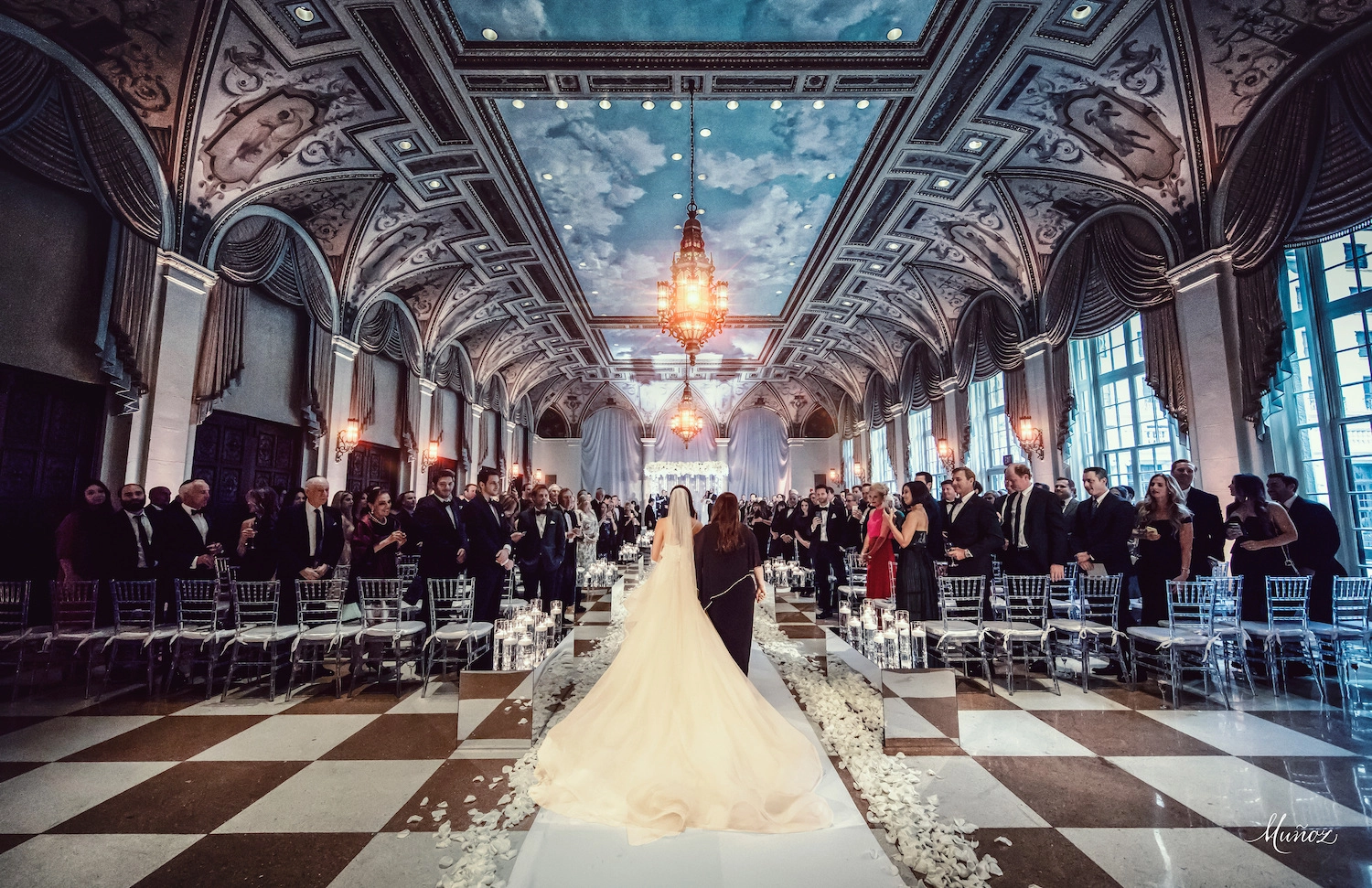
Guests are seated 15 to 30 minutes before start time while prelude music plays. Ushers often seat the bride's family on the left and the groom's on the right in traditional Christian ceremonies, though many couples now invite guests to sit anywhere.
The processional
A common order is:
- Grandparents
- Parents of the groom, or the groom's mother escorted by an usher
- Mother of the bride
- Officiant, groom and groomsmen (or they enter from the side)
- Bridesmaids, then the maid of honor
- Ring bearer and flower girl
- The bride, with her escort
Jewish ceremonies follow a different order, often with both sets of parents escorting the couple. Talk with your officiant about traditions that matter to you.

Leave a few seconds between each person in the processional. It's the easiest way to give everyone their moment.
The ceremony itself
- Welcome and opening remarks from the officiant.
- Readings, often one or two, from family or friends.
- The vows, traditional or personal. Our guide to writing your own vows can help.
- Ring exchange.
- Unity ritual, if you're including one, such as a sand ceremony or handfasting.
- Declaration of marriage and the kiss.
The recessional
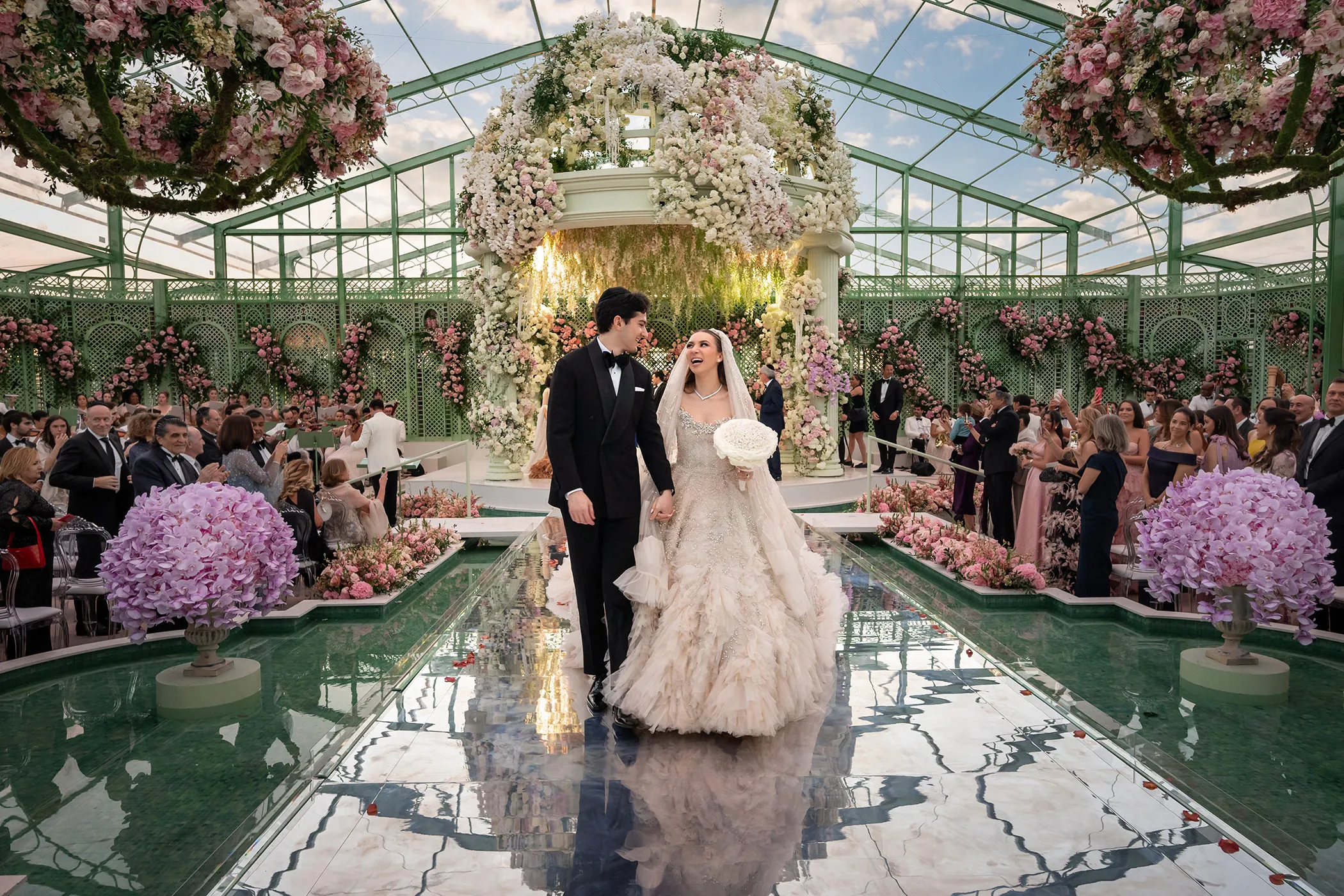
The couple walks out first, followed by the wedding party in pairs, then parents and grandparents. Pause for a second kiss at the end of the aisle; it makes a lovely photo.
Tips for a smooth ceremony
- Slow down the processional. Leave space between each pair.
- Ask your officiant to step aside for the first kiss so they aren't in the background of the shot.
- Consider an unplugged ceremony to keep phones out of the aisle.
- Rehearse the night before with everyone who walks.
Ceremonies indoors have their own considerations. Read our tips on indoor wedding ceremony photos.