The short answer
Common veil lengths are shoulder, elbow, fingertip, chapel and cathedral. Fingertip is the most versatile, while chapel and cathedral veils are formal and dramatic. Choose based on your dress, venue and how much you want to move, and consider removing a long veil for the reception.
A veil can transform a dress, and the length changes the whole effect. Here's how the main options compare.
The main veil lengths
- Shoulder (about 20 inches): playful and easy, great with detailed necklines.
- Elbow (about 25 inches): ends near the waist, highlighting a fitted bodice.
- Fingertip (about 38 to 40 inches): the most popular. It suits almost every dress.
- Chapel (about 90 inches): brushes the floor and trails slightly. Formal and romantic.
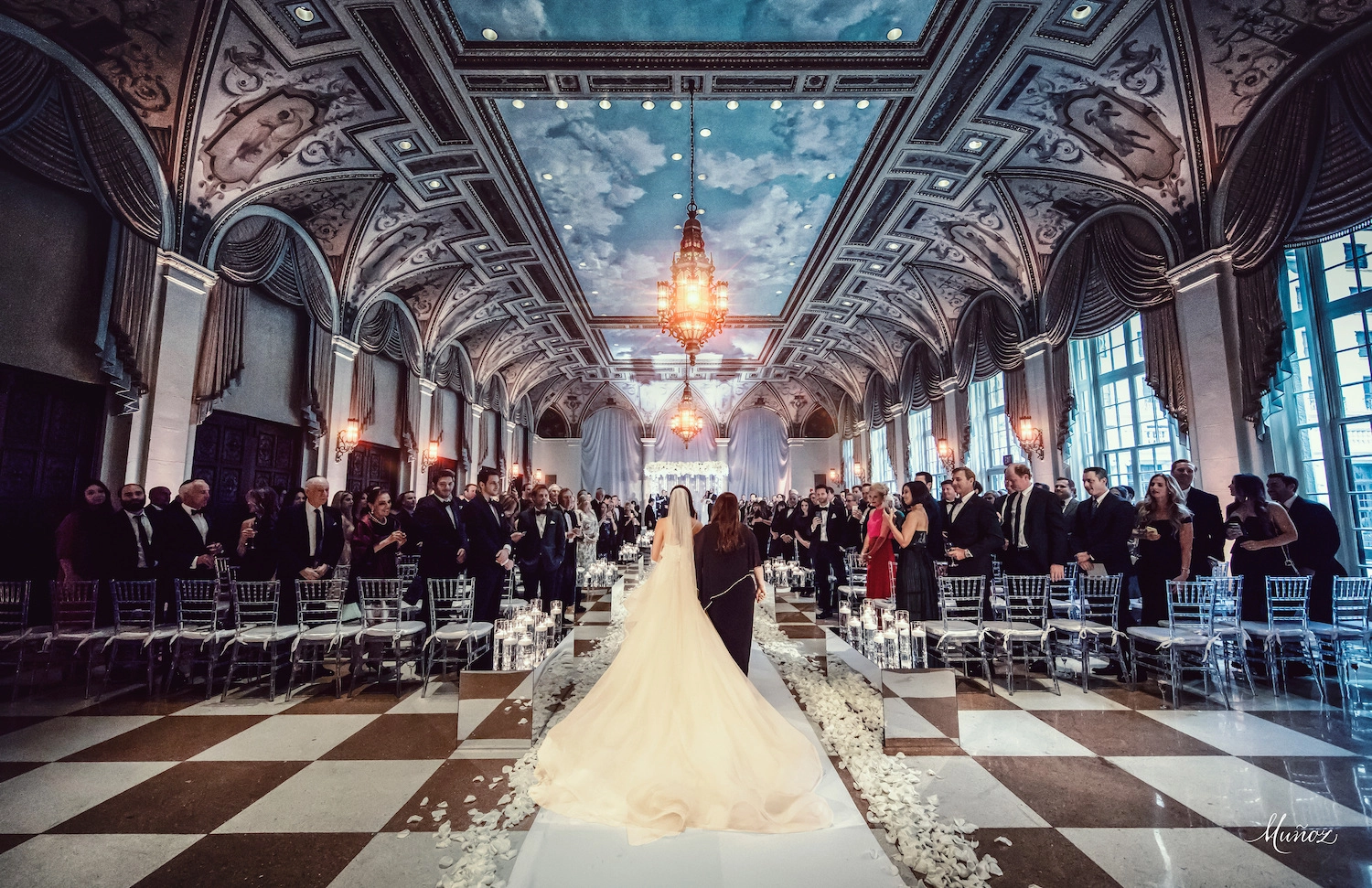
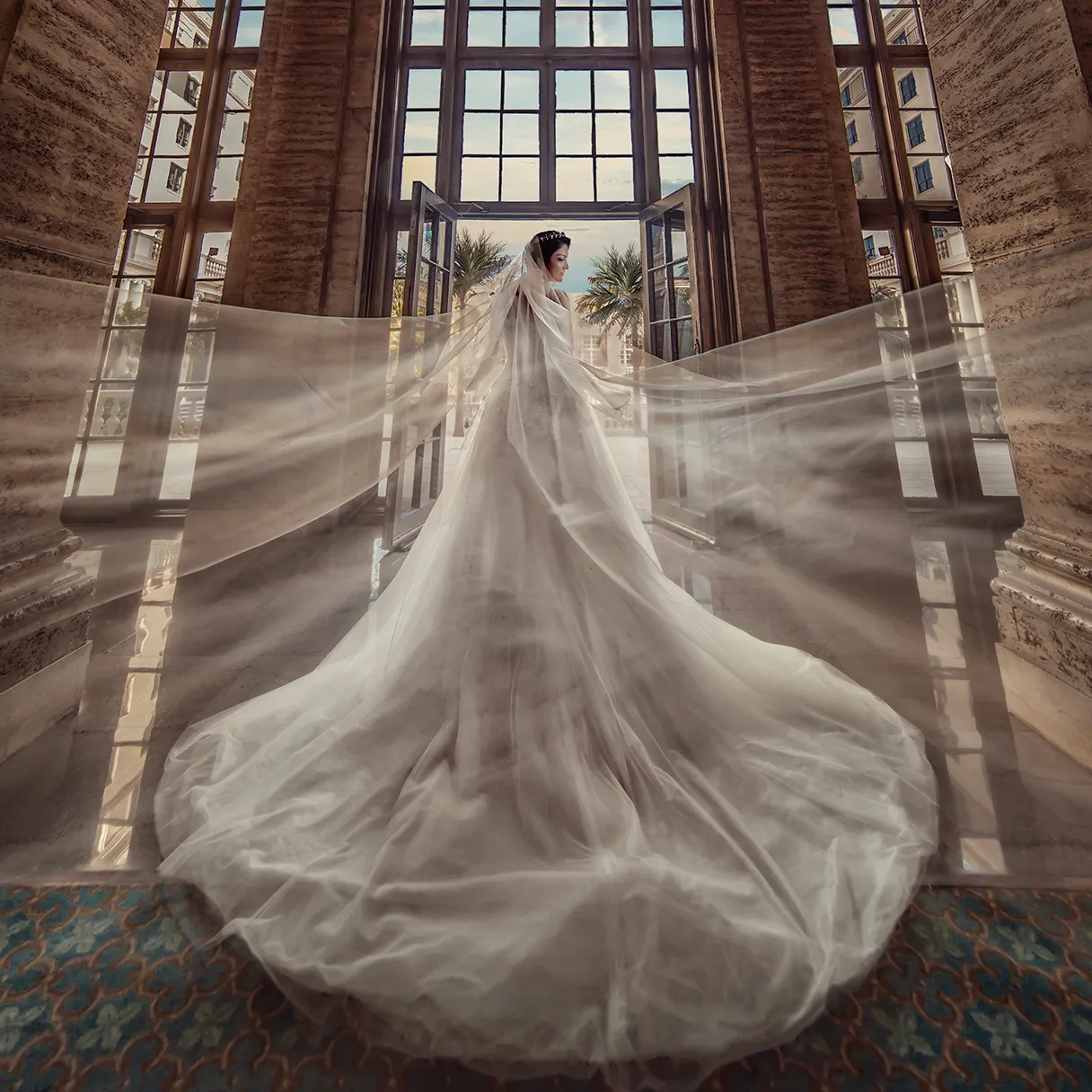
- Cathedral (108 to 120 inches or longer): dramatic and regal, often extending past the train.
Match the veil to your dress
Simple, sleek gowns pair well with long, sheer veils. Heavily embellished dresses often look best with a plain veil, or an edged veil that doesn't compete.
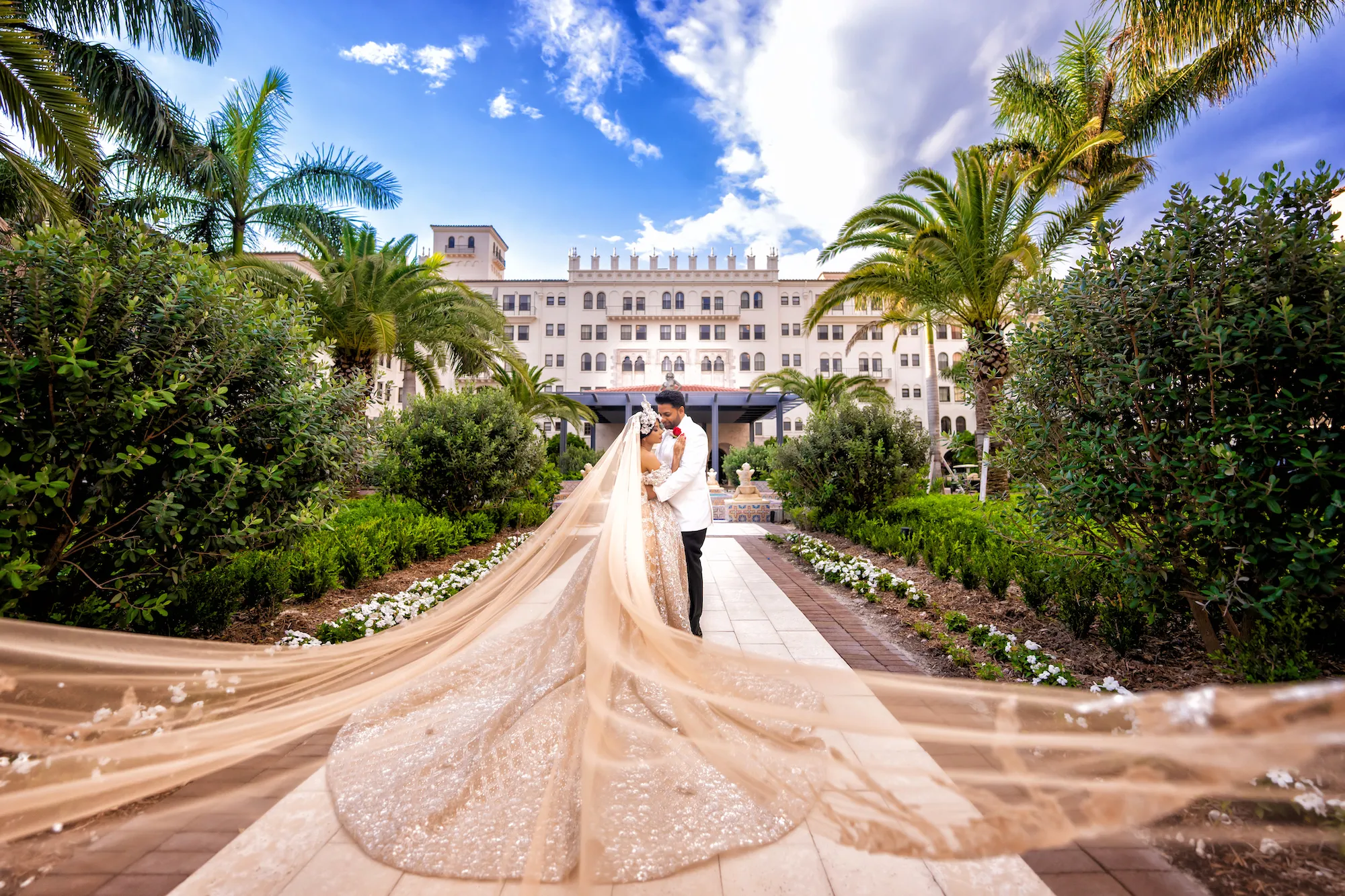
A long veil is the closest thing a bride has to a special effect.
Consider your venue
Grand ballrooms, churches and long aisles suit chapel and cathedral lengths. Beaches and windy rooftops are harder with long veils; a fingertip or a heavier edge helps. Read our windy wedding day tips if you're marrying by the water.
Plan how you'll wear it
- Where it sits: crown, mid-back of the head or under an updo. Show your stylist at your trial.
- Blusher or no blusher: a front layer can be lifted at the altar.
- When it comes off: many brides remove long veils before the reception for dancing.
Plan for photos
A long veil is magic in motion. Ask a bridesmaid to help arrange it for the processional and give your photographer a few minutes for veil portraits. Our veil photo tips explain how.